Progressive Overload: How to Apply It, Step by Step
Progressive overload is what keeps muscles growing. Learn the five ways to apply it, a simple double progression, and what to do when you stall.
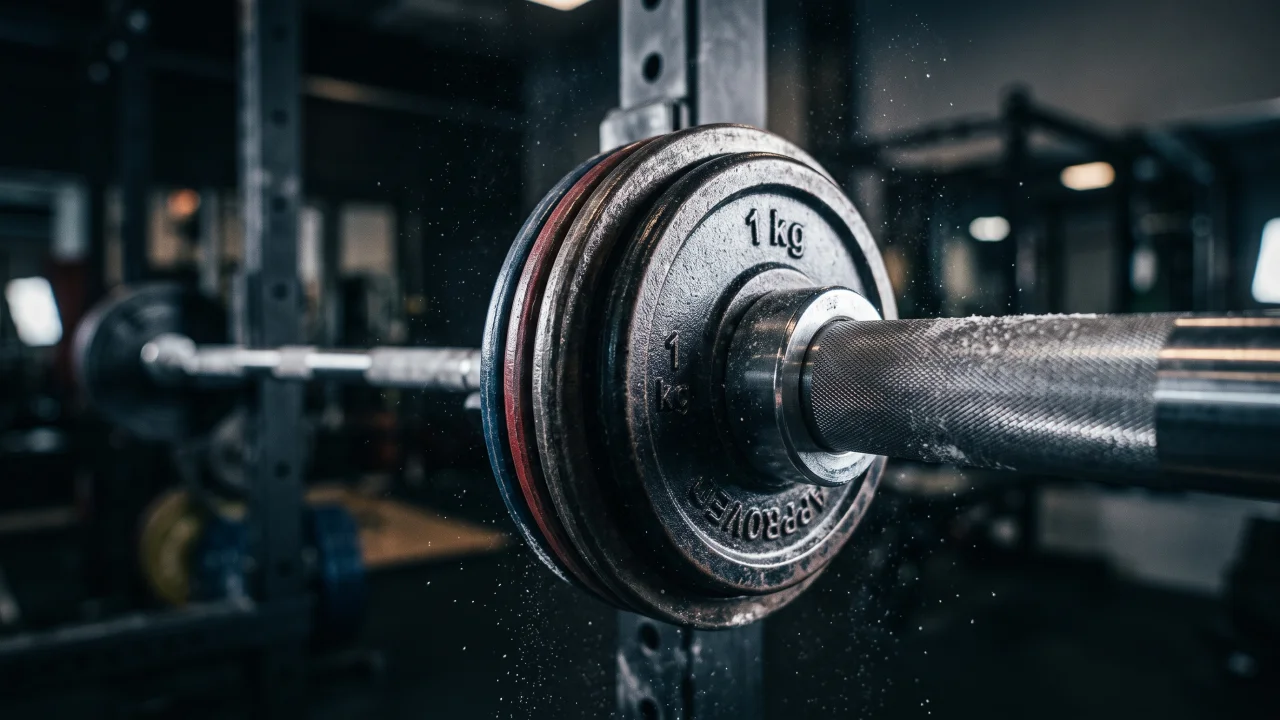
Progressive overload means asking your body for slightly more than it did last time. Without it, a workout becomes maintenance: the muscle adapts to the demand it already knows and has no reason to change.
The idea sounds simple, and it is. The difficulty is in the details: what exactly should go up, by how much, and how often. This guide gives you a clear method you can start using in your next workout.
What progressive overload really is
Overload does not mean adding weight every session. It means increasing the total challenge over time, and weight is only one of the ways to do that. A lifter who goes from 8 reps to 10 reps with the same load has progressed, even though the bar did not get heavier.
The reverse is also true. If you add weight but your technique falls apart and the range of motion shrinks, the muscle is not getting a better stimulus. It is just getting a worse repetition with more weight on it.
Five ways to progress
- Add load: put a little more weight on the bar or the machine.
- Add reps: do one or two more repetitions with the same load.
- Add sets: do one more hard set for the muscle in the week.
- Improve quality: more range of motion, a controlled lowering phase, and a pause where it helps.
- Shorten rest: do the same work with a little less time between sets, when your reps hold.
Most of the time, the first two are enough. Use the others when you have run out of room in load and reps, or when a lift is hard to load in small steps.
A simple method: double progression
Double progression is the easiest way to organize this. You choose a rep range for each exercise, for example 8 to 12 reps. You start with a load that lets you do about 8 reps on your hard sets. Each session you try to add a rep. When you reach 12 reps on all your sets, you raise the load a little and go back to 8.
A practical example: you do dumbbell curls for 3 sets. Week one you get 8, 8 and 7 reps with 10 kg. Week two you get 9, 8 and 8. Week three, 10, 9 and 9. You keep going until you hit 12, 12 and 12, and then you move up in weight and start again near 8 reps.
This method works because it makes the next step obvious. You do not have to guess when to add weight, and the increases stay small enough to keep your technique clean.
How much weight should you add?
Keep the jump small. A common guideline is a small percentage of the load, which in practice is often 1 to 2.5 kg on upper-body lifts and 2.5 to 5 kg on lower-body lifts. On isolation exercises, even 1 kg can be a meaningful step.
If the smallest plate you have is too big for the exercise, you can use the other levers. Add a rep first, then add the weight when you reach the top of your range. Small plates, or a gym with fractional weights, make this much easier.
- Compound lifts for the lower body: steps of 2.5 to 5 kg.
- Compound lifts for the upper body: steps of 1 to 2.5 kg.
- Isolation exercises: steps of 1 kg or the smallest weight available.
How do you know it is time to go up?
Look at your reps and at how close to failure you are. If you hit the top of your rep range on every set, and the last set still felt like you had one or two reps left, it is time to add load.
If you hit the top of the range but the last reps were slow and shaky, repeat the same load once more before increasing. Progress should feel like a step up, not like a gamble.
What to do when you stall
Everyone stalls sometimes. Before changing the whole program, check the basics: are you sleeping enough, eating enough, and training the muscle often enough? A stall for a single week is normal and does not need a fix.
If you are stuck for three or four weeks on a lift, try one change at a time. Drop the load by about 10 percent and build back up with cleaner reps, or add a set per week for the muscle, or swap to a close variation for a few weeks.
- Check sleep and food first.
- Make sure you are logging the real numbers, not what you remember.
- Take a lighter week every 6 to 8 weeks to let fatigue go down.
Common mistakes
The most common mistake is to add weight too fast. The second is to count progress only by weight and to ignore reps and quality. The third is not writing anything down, because you cannot overload what you cannot remember.
Another mistake is to change the exercises every week. Exercise variety is fine, but you need to repeat a lift enough times to see whether you are improving at it.
Track every step with eBolts
Progressive overload depends on knowing what you did last time. In eBolts you log load, reps and sets for each exercise, see your previous workout while you train, and adjust the weight in small steps, so each session starts from a clear target.
Frequently asked questions
How often should I increase the weight?
There is no fixed schedule. Increase the load when you reach the top of your rep range on all sets with good technique. For some lifts that happens every week or two, and for others it takes a month or more.
Can I progress without adding weight?
Yes. You can add reps, add a set, improve your range of motion and control, or reduce rest while keeping the same reps. All of these raise the total challenge for the muscle even when the weight stays the same.
What is double progression?
It is a method where you pick a rep range, such as 8 to 12, and add reps each session with the same load. When you reach the top of the range on all sets, you raise the weight a little and start again at the bottom of the range.
How much weight should I add each time?
Small steps work best. Around 1 to 2.5 kg for upper-body lifts and 2.5 to 5 kg for lower-body lifts are common, and on isolation exercises 1 kg is often enough. If your technique gets worse, the jump was too big.
What should I do if I stop progressing?
First check your sleep, food and how often you train the muscle. If those are fine, change one thing at a time: lower the load by about 10 percent and rebuild, add a set per week, or use a close variation of the exercise for a few weeks.
Recommended gear
Affiliate links: we may earn a commission at no extra cost to you.
Put into practice: Routines & Guides
Follow workouts and detailed exercise biomechanics directly related to this article:
Track every set — free
Fractional loads, rest timer, history, last-time suggestions and progress charts. Works offline.
Create free account